
5 Foods to Lower Cholesterol

Posted by Aaron W.

Find out about the everyday, easy-to-find foods that can help you improve your cholesterol. These 5 foods will keep you and your doctor smiling when the blood work results come back!

5 Foods to Lower Cholesterol

Posted by Aaron W.

Find out about the everyday, easy-to-find foods that can help you improve your cholesterol. These 5 foods will keep you and your doctor smiling when the blood work results come back!

% of Adults, Adolescents, Children Overweight

Posted by Aaron W.

The trend of overweight individuals in the U.S. has risen significantly over the past 40 years, see the statistics gathered by the Census Bureau for yourself.

Welcome

Posted by Aaron W.

I hope you find this blog helpful and easy to use, and I hope you can use it to improve upon you own health. Take on your own health!

4 Keys to Weight Loss

Posted by Aaron W.

The National Weight Loss Registry has comprised a list of 4 keys to weight loss, based off their study of over 5,000 participants who have lost weight (over 30 lbs) and kept it off (at least 1 year).

Showing posts with label weight loss. Show all posts

Healthy Back? 5 easy steps

Posted by Aaron W. On 2/22/2012 1 comments
From Harvard HEALTHbeat
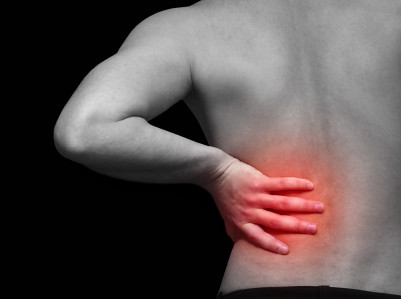

Reno NV Low Back Pain
1. STAY FIT
Weak back and abdominal muscles — due to deconditioning or age — cause or exacerbate many cases of low back pain.
A stretching and strengthening regimen should target the back, abdominal, and buttock muscles.
Certain aerobic activities are safer for your back than others. For instance, bicycling (either stationary or regular), swimming, and walking lead the list of low-risk, high-benefit activities for most people’s backs.
Sports and activities such as football, tennis, gymnastics, wrestling, weight lifting, rowing (crew), running, aerobic dance, and ballet involve a relatively high risk for back injury because of the extension, lifting, or impacts involved.

2. MAINTAIN A HEALTHY WEIGHT
The heavier you are, the greater the load your spine must carry. To make matters worse, if the bulk of your weight comes in the form of abdominal fat, rather than muscle, your center of gravity can shift forward — a condition that puts added pressure on your back.

3. KICK THE HABIT
Scientists believe that the nicotine in cigarettes contributes to low back pain in two ways. First, nicotine hampers the flow of blood to the vertebrae and disks. This impairs their function and may trigger a bout of back pain. Second, smokers tend to lose bone faster than nonsmokers, putting them at greater risk for osteoporosis, another common cause of back pain.

4. LIGHTEN YOUR LOAD
If you use a backpack, you can take steps to protect yourself. For starters, use both of the pack’s straps instead of slinging one strap over a shoulder.  When carrying a heavy load, put the heaviest items as close as possible to the center of the back, and use the hip strap for support.  Above all, remember to bend from your knees when picking up your pack.

5. DEVELOP BACK-HEALTHY HABITS
Everyday activities, from vacuuming your house to sitting in front of the computer for hours, can take a toll on your back, particularly if you aren’t schooled in proper body mechanics. But you can take some of the pressure off your back by following these simple tips:
  • While standing to perform ordinary tasks like ironing or folding laundry, keep one foot on a small step stool.
  • Don’t remain sitting or standing in the same position for too long. Stretch, shift your position, or take a short walk when you can.
  • When bending from the waist, always use your hands to support yourself.
  • When sitting, keep your knees a bit higher than your hips and bend them at a 90-degree angle. Sit with your feet comfortably on the floor. If your feet don’t reach the floor, put a book or a small stool under them.
  • Because vacuuming can take a toll on your back, tackle rooms in chunks, spending no more than five to 10 minutes at a time doing this task.

Picture from renochiropractic
___________________________

Calorie-burn at Rest

Posted by Aaron W. On 12/20/2010 0 comments
From: NY Times

INTRO:
New research suggests that the warmth that you feel in your body for hours after a HARD workout doesn't mean you're burning calories for hours afterwards. It's more likely that the extended warmth is part our body's process of repairing minor tissue damage.  Instead, the intensity is what keeps the calories rolling off for some time.


Dr. Joseph LaForgia, an exercise physiologist at the University of South Australia, says people who exercise intensely — doing repeated sprints, for example — can experience a prolonged metabolic effect. Their metabolic rates can go up and remain elevated for seven hours after the session is finished.
PushEven so, the extra calories burned were about 10 percent of the calories burned during the intense exercise.

As for people who exercised moderately, like most people do, the small increase in metabolism lasted no more than two hours and added up to only about 5 percent of the amount they burned while exercising. And since a modest exercise bout does not burn nearly as many calories as an intense one, people who exercised modestly ended up with very few extra calories burned afterward.

CONCLUSION:
If you workout HARD during exercise and you are in better shape, you will likely get longer (up to 7 hours) calorie-burn compared to those that workout moderately and are in fair or poor shape.  Keep up the hard work.

Full story
Photo courtesy: Vovva
_________________

4 Keys to Weight Loss Success

Posted by Aaron W. On 12/06/2009 1 comments

Based on research by The National Weight Control Registry (www.nwcr.ws)

Since 1993, the National Weight Control Registry (NWCS) has been studying the behaviors of people who successfully lose weight and keep it off. Their research began with simply describing the kinds of people that are successful weight losers and has progressed to research comparing the success of surgical vs. non-surgical weight losers. By the way, they found it doesn't really matter how you lost it, you MUST overcome the cues that got you overweight in the first place (reference 1).

Since their beginning, the NWCS has looked at the behaviors of over 5,000 people who have manged to lose 30 lbs or more and kept it off for at least a year - their averages are 67 lbs lost and 6 years maintained. Using all this data, they've come up with 4 common characteristics amongst all these losers.

NOTE: They did NOT find that genes had the overwhelming determination if you were going to be overweight or not. You have more control than you think!

What they Screamed!!

  • weight loss is hard work
  • don't believe in programs claiming quick, or easy methods... it won't stick
  • Losing weight is worth the sacrifice! Life is better without the weight!
  • It gets easier

  1. Eat a Low-Fat, High-Carbohydrate Diet

    People stated they got most of their carbs from beans and veggies which equated to 56% of their total daily calories. In turn, they got 19% of their calories form protein and25% from fats. They seemed to consume between 1,300 and 1,400 calories per day, but the Registry feels like that's probably underestimated a bit. It was also clear to them that the problem for most people wasn't so much about WHAT they were eating, as it was HOW MUCH they were eating... calories in must be less than calories out.

  2. Exercise Every Day

    Registrants exercised 1 - 1.5 hours/day, but made note that they broke up their exercise throughout the day. For example, walking the dog 20 mins in the morning, walking the stairs 20 mins at lunch and getting on the elliptical machine for 30 mins in the evening. They noted that the most common form of exercise was walking. They proposed this question: "If you could lose weight and keep it off for the rest of your life with just 1 hr/day of exercise, would it be worth it?"

  3. Eat Breakfast Every Day

    They hypothesized that skipping breakfast often causes people to overeat later, or eat junk that is easily accessible (candy dish, vending machine). Registrants ate breakfast every day.

  4. Keep Track of Your Weight and Eating

    They say that they aren't sure why regular food and weight journaling is a common characteristic, but speculate that they use it as an "early warning system." People who are very aware of their weight can tell whether they put on a pound over the weekend and need to step it up, or whether they maintained well. Gaining weight in large bunches (which could happen when not weighing frequently) is harder to recover from and can cause a drop in morale - which could lead to giving up.

Visit www.nwcr.ws for full details


Excerpt from Centers for Disease Control and Prevention (CDC) report: Health, US, 2008:

  • 67% percent of noninstitutionalized adults age 20 years and over who are overweight or obese (2005-2006)
  • 34% percent of noninstitutionalized adults age 20 years and over who are obese (2005-2006)
  • 18% percent of adolescents age 12-19 years who are overweight (2005-2006)
  • 15% percent of children age 6-11 years who are overweight (2005-2006)
  • 11% percent of children age 2-5 years who are overweight (2005-2006)

TRUSTED Sites Search

Find trusted health information, recipes and exercise videos from ONLY founded medical resources like Cleveland Clinic and WebMD by using the searches below.

Click HERE for a complete list of resources used in these searches.


General Health

Loading

Exercise Videos


Recipes


Recent Posts


DISCLAIMER:
The contents displayed within this public group(s), such as text, graphics, and other material ("Content") are intended for educational purposes only. The Content is not intended to substitute for professional medical advice, diagnosis, or treatment. Always seek the advice of your healthcare provider with any questions you may have regarding your medical condition. Never disregard professional medical advice or delay in seeking it because of something you have read in a public group(s).

If you think you may have a medical emergency, call your healthcare provider or 911 immediately. Any mention of products or services is not meant as a guarantee, endorsement, or recommendation of the products, services, or companies. Reliance on any information provided is solely at your own risk. Please discuss any options with your healthcare provider.

The information you share, including that which might otherwise be Protected Health Information, to this site is by design open to the public and is not a private, secure service. You should think carefully before disclosing any personal information in any public forum. What you have written may be seen, disclosed to, or collected by third parties and may be used by others in ways we are unable to control or predict, including to contact you or otherwise be used for unauthorized or unlawful purposes. As with any public forum on any site, this information may also appear in third-party search engines like Google, MSN, Yahoo, etc.

PageRank Button